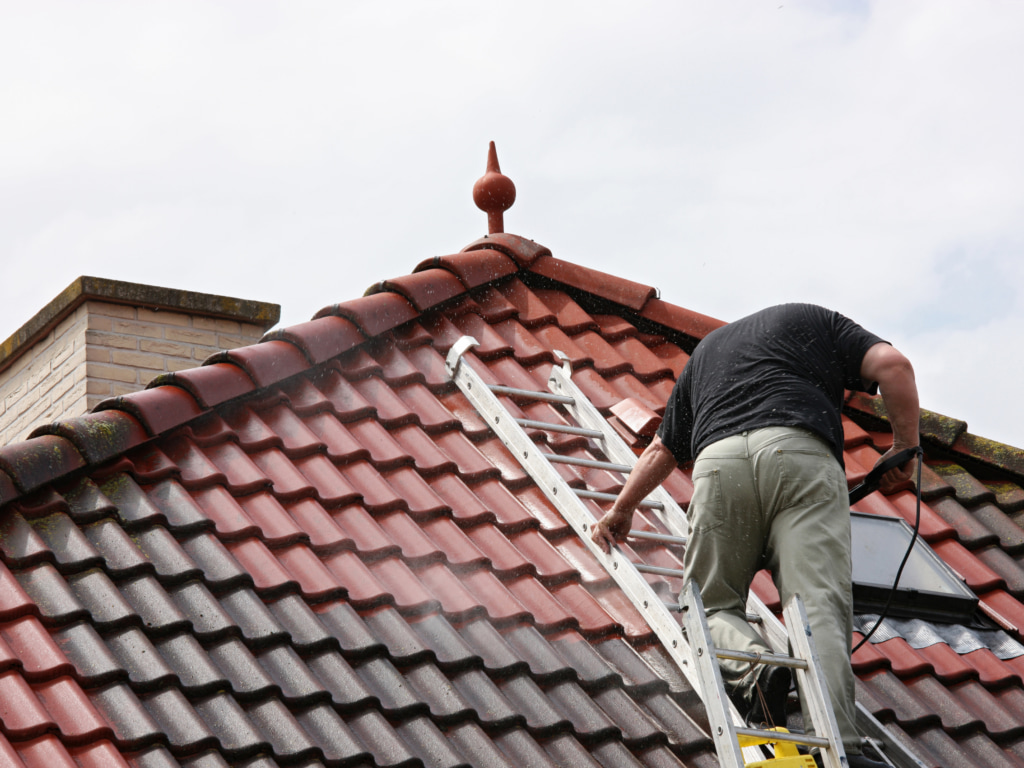
A roof patch can be an appropriate response to a clearly defined local defect. Replacing a damaged tile, sealing a small split or repairing a limited section of flashing may restore weather resistance when the materials around it remain sound.
Problems arise when patches are applied repeatedly without establishing why the roof keeps failing. If water returns in the same place, new leaks appear nearby or several areas need frequent attention, localised work may no longer provide a dependable solution.
For homeowners in Haslemere, Surrey, a wider roof assessment can determine whether another focused repair is justified or whether the pattern of deterioration calls for a more complete approach.
How Can You Tell When Roof Patching Is No Longer Working?
The decision should not be based on the number of patches alone. Their location, performance and relationship to the roof’s overall condition are more important.
The Same Leak Keeps Returning
A leak that returns after several repairs may indicate that the original entry point has not been identified. Water can travel beneath tiles, along underlay or across timbers before it appears inside the property.
A patch applied directly above an internal stain may therefore treat the wrong section. The roof’s layout, junctions and drainage routes need to be examined to trace where the water is actually entering.
Recurring moisture may also mean that an earlier repair has deteriorated or that damage extends beyond the patched area.
New Leaks Are Appearing Nearby
When damp patches begin appearing around an existing repair, the problem may be spreading through adjacent materials. Underlay, battens or roof decking could have deteriorated beyond the original visible defect.
It is also possible that several nearby weaknesses share the same cause. A failing valley, for example, may allow water to affect more than one internal area. Treating each stain separately can lead to a sequence of patches without resolving the defective junction.
Patches Cover a Growing Area
An isolated repair should remain confined to the damaged section. If each new patch has to extend further across the roof, the surrounding material may no longer provide a stable base.
This is particularly relevant on flat roofs, where layers of sealant or repair membrane can conceal cracks, open seams and trapped moisture. Continually covering the surface may improve its appearance temporarily while deterioration continues underneath.
A larger affected area should be inspected before further material is added.
The Roof Covering Is Failing in Several Places
Replacing individual tiles or slates is often effective when damage is genuinely localised. However, repeated failures across different roof slopes can indicate more general deterioration.
Common warning signs include:
- Tiles becoming brittle or breaking frequently
- Slates slipping in unrelated areas
- Fixings failing across several sections
- Widespread cracking on a flat roof
- Loose ridge, hip or verge materials
- Multiple leaks with no single shared source
In these circumstances, individual patches may deal with each visible defect while leaving the underlying pattern unchanged.
The Supporting Materials Have Deteriorated
A patch depends on the condition of the material around and beneath it. If battens are decayed, underlay has become fragile or the roof deck is moisture damaged, a surface repair may not remain secure.
Concealed deterioration cannot always be identified from ground level. Inspecting accessible parts of the roof space can reveal staining, damp insulation, softened timber or signs that water has travelled beyond the visible leak.
Where supporting components are affected over a wide area, further patching may not restore reliable performance.
Roof Junctions Have Been Patched Repeatedly
Chimneys, valleys, roof windows, abutments and changes in pitch require carefully formed details. These locations direct concentrated rainwater and often include flashing or other specialist components.
Repeated sealant around a junction may indicate that the complete detail needs to be repaired or renewed. Surface patching cannot compensate for incorrectly formed flashing, failed mortar or a damaged valley lining.
The whole junction should be examined rather than adding material to the most obvious gap.
Moisture Remains Trapped Beneath the Repair
On flat roofing systems, water can become trapped between the covering and the deck. The surface may blister, feel soft or continue showing dampness even after a split has been patched.
Adding another layer over wet or unstable materials can trap the problem rather than remove it. The extent of the moisture and the condition of the deck must be established before deciding whether a local repair remains appropriate.
The Repair Has Become a Temporary Routine
If roofing work is regularly needed after periods of rain or wind, the roof may no longer be responding to local treatment. A cycle of temporary repairs often suggests that the cause has not been addressed or that the materials are deteriorating generally.
Keeping a record of where previous work was completed can help identify a pattern. Repairs repeatedly concentrated around one junction may point to a defined defect, while problems spread across the roof may indicate wider ageing.
When Is Another Localised Repair Still Appropriate?
A further repair may remain sensible when:
- The new defect is clearly isolated
- Previous repairs remain sound
- Most of the roof covering is serviceable
- Underlay, battens and structural timbers are in reasonable condition
- The cause can be identified and corrected
- The repair can be integrated properly with surrounding materials
The aim should be to restore the roofing system, not simply cover a visible crack or gap.
When Should the Whole Roof Be Assessed?
A complete assessment becomes important when repairs are recurring, affecting different areas or no longer remaining watertight. It should consider the roof covering, fixings, underlay, battens, flashing, drainage points and accessible structural components.
This does not automatically mean that full replacement will be necessary. A coordinated repair to one larger section may resolve several connected problems. The purpose of the assessment is to establish the most appropriate scope of work based on evidence.
Haslemere Roofing Repairs can inspect repeatedly patched roofs in Haslemere, Surrey, identify whether the defects are connected and determine which materials remain serviceable. This helps avoid both unnecessary replacement and continued patching where it is no longer effective.
Conclusion
Repeated patching stops being effective when leaks return, damage spreads beyond repaired areas or the surrounding materials can no longer support another local treatment. Multiple unrelated failures can also indicate that deterioration is affecting the roof more generally.
A thorough inspection can establish whether a planned repair will restore dependable performance or whether broader work is required. If your roof in Haslemere, Surrey, has needed several patches without a lasting result, contact Haslemere Roofing Repairs to arrange a professional assessment.
Call us on: 01428 770 589
Click here to find out more about Haslemere Roofing Repairs
Click here to complete our contact form and see how we can help with your roofing needs.